The Ultimate 2 Weeks Itinerary Malaysia: A Journey Through Culture, Nature, and Islands
Malaysia is a country that doesn’t just invite you to visit; it invites you to feel. From the humid, spicy air of Kuala Lumpur’s street food stalls to the mist-clinging hills of the tea plantations and the sun-drenched shores of the Andaman Sea, this nation is a sensory overload in the best possible way.
Table of Contents
ToggleIf you are visiting from the United States, Australia, or nearby Singapore, you are in for a treat. Malaysia offers a unique blend of modern infrastructure and raw, untouched beauty that is hard to find elsewhere. But with so much to see, how do you pack it all into a single trip? That is where a well-structured 2 weeks itinerary Malaysia comes in.
This guide is designed to take the stress out of planning. We have crafted a route that hits the “Big Four”—Kuala Lumpur, Cameron Highlands, Penang, and Langkawi—giving you a perfect mix of urban exploration, highland relaxation, heritage charm, and island hopping.
Whether you are here for the first time or returning to explore deeper, this 2 weeks itinerary Malaysia will ensure you don’t miss a beat.
Frequently Asked Questions (FAQ)
1. How do I get to Penang National Park from George Town?
The most budget-friendly way is to take the Rapid Penang Bus 101 from the Komtar Bus Terminal or Chulia Street. The bus runs frequently (every 15–20 minutes) and costs roughly RM 2.70–RM 4.00. The journey takes about 60 to 90 minutes, depending on traffic.
- Tip: The bus ends at Teluk Bahang; the park entrance is just a short walk from the bus stop. If you prefer comfort, a Grab car will cost between RM 30–RM 50 and takes about 45 minutes.
2. How do I get to Batu Ferringhi from George Town?
You can use the same Rapid Penang Bus 101 (bound for Teluk Bahang) or Bus 102 (from the airport). The ride takes approximately 45–60 minutes from the city center.
- Cost: Fares are around RM 2.00–RM 3.00.
- Tip: Sit on the right side of the bus for scenic coastal views as you approach the beach area.
3. How do I use public transport in Kuala Lumpur?
Public transport in KL is modern and efficient. Here is the step-by-step:
- Get a Card: Buy a Touch ‘n Go card (available at train stations, Watsons, or convenience stores) for cashless travel on the MRT, LRT, Monorail, and buses. You can also use the MyCity Pass (1-day or 3-day unlimited travel) if you plan to move around a lot.
- Navigation: Use Google Maps or the Moovit App to check routes.
- Free Options: Look for the GOKL City Bus (purple buses), which offers free rides around major tourist spots like Bukit Bintang and KLCC.
4. When is the best time to visit Malaysia?
It depends on which side of the peninsula you are visiting:
- West Coast (Penang, Langkawi, KL): Best visited from November to April when it is dry and sunny.
- East Coast (Perhentian Islands, Redang, Tioman): Best visited from March to October. Avoid the East Coast between November and February, as monsoon rains often force resorts to close.
5. What is the most beautiful part of Malaysia?
This is subjective, but three spots consistently top the list:
- The Perhentian Islands: For crystal-clear water and white sandy beaches (the “Maldives of Malaysia”).
- Cameron Highlands: For lush green tea plantations and misty mountains.
- Semporna, Sabah: For world-class diving and stunning marine biodiversity that rivals the best in the world.
Days 1–3: Kuala Lumpur – The Beating Heart of Malaysia
Your 2 weeks itinerary Malaysia begins in the dazzling capital, Kuala Lumpur (KL). For travelers arriving from the US or Australia, KLIA (Kuala Lumpur International Airport) is your likely entry point. Singaporean neighbors might zip up on a quick 50-minute flight or even drive.
Day 1: Skyline Icons and Street Food
Drop your bags at your hotel in Bukit Bintang or KLCC and head straight for the icons. The Petronas Twin Towers are non-negotiable. While they are stunning from the ground, the view from the skybridge offers a perspective of the city’s rapid growth.
In the evening, dive into Jalan Alor. This street comes alive at night with the clatter of woks and the smell of satay. It’s the perfect introduction to the culinary diversity that will define your 2 weeks itinerary Malaysia.
Day 2: Culture and Caves
Start early to beat the heat at the Batu Caves. The rainbow steps are Instagram-famous, but the cavernous limestone temple at the top is spiritually grounding. Watch out for the cheeky macaques!
In the afternoon, explore the colonial architecture around Merdeka Square and wander through Chinatown (Petaling Street). Don’t miss the Sri Mahamariamman Temple, the oldest Hindu temple in KL, showcasing the city’s religious harmony.
Day 3: Modern Cafes and Lush Parks
Before leaving the city, spend a morning at the Perdana Botanical Gardens. It’s a green lung in the city center. Afterward, grab a flat white in one of the hipster cafes in Bangsar or Chow Kit, areas that are quickly redefining KL’s cool factor.

Days 4–6: Cameron Highlands – Mist, Tea, and Strawberries
After the humidity of KL, your 2 weeks itinerary Malaysia takes a refreshing turn. You are heading up to the Cameron Highlands, a hill station famous for its tea plantations and cool climate.
Getting There: The Journey Up
For many travelers, figuring out the logistics is the hardest part. If you are looking for the bus Kuala Lumpur to Cameron Highlands, you have excellent options. Most buses depart from TBS (Terminal Bersepadu Selatan), which is KL’s state-of-the-art transport hub.
The bus Kuala Lumpur to Cameron Highlands is a scenic 4 to 5-hour journey that winds up the mountain roads. It is affordable and comfortable, with VIP coaches often available for a few extra dollars.
When planning your kl to Cameron highlands bus, aim for a morning departure (around 8:30 AM or 10:00 AM) to arrive by early afternoon. Popular operators like Unititi Express or CS Travel provide reliable service. Booking your kl to Cameron highlands bus ticket online in advance is highly recommended, especially during holidays.
Day 4: Arrival and Steamboat Dinner
Upon arrival in Tanah Rata, you will notice the temperature drop. It’s crisp and refreshing. Check into your guesthouse or colonial-style resort. For dinner, the local tradition is “steamboat”—a hot pot meal that warms you up perfectly in the chilly evening air.
Day 5: The Mossy Forest and Tea Plantations
This is a highlight of any 2 weeks itinerary Malaysia. waking up early to visit the Boh Tea Plantation. The view of the emerald-green rolling hills is breathtaking. After a cup of fresh highland tea, head to the Mossy Forest. The boardwalk here takes you through an ancient, mist-covered ecosystem that feels like a set from Lord of the Rings.
Day 6: Strawberries and Markets
Spend your final highland morning picking fresh strawberries at a local farm. Before you leave, check the bus schedule for your next leg. While you successfully navigated the bus Kuala Lumpur to Cameron Highlands route to get here, moving north requires a bus to Penang or Butterworth.
Days 7–10: Penang – The Pearl of the Orient
No 2 weeks itinerary Malaysia is complete without Penang. Famous for its UNESCO World Heritage site, George Town, this island is a food lover’s paradise.
Getting There
You might be wondering how to get to Penang Malaysia from the highlands. You can take a direct bus from Tanah Rata to Penang Sentral (Butterworth) or Sungai Nibong on Penang Island. The journey takes about 4–5 hours.
Alternatively, if you skipped the highlands and are coming from KL, the ETS train to Butterworth is a fantastic option. From Butterworth, you can take the iconic ferry across to the island. This is often cited as the most scenic answer to how to get to Penang Malaysia, as you approach the George Town skyline from the water.
Day 7: George Town Heritage Walk
Start your Penang adventure by getting lost. The streets of George Town are an open-air museum. Hunt for the famous street art murals by Ernest Zacharevic, including the “Children on a Bicycle.”
Day 8: The Ultimate Food Trail
Penang is the food capital of Malaysia. Your 2 weeks itinerary Malaysia must include a bowl of Asam Laksa at Air Itam and Char Koay Teow on Siam Road. For dinner, visit a hawker center like Gurney Drive or New Lane to sample everything from oyster omelets to Cendol.
Day 9: Nature and Views
Take the funicular train up Penang Hill for panoramic views of the island. Later, visit the Kek Lok Si Temple, the largest Buddhist temple in Malaysia. The sheer scale and intricate designs are mesmerizing.
Day 10: Relaxing or Researching
Spend your last day in Penang soaking up the vibe at a cafe in a refurbished shophouse. If you are chatting with other travelers, you’ll often hear them ask how to get to Pen
Days 11–14: Langkawi – The Jewel of Kedah
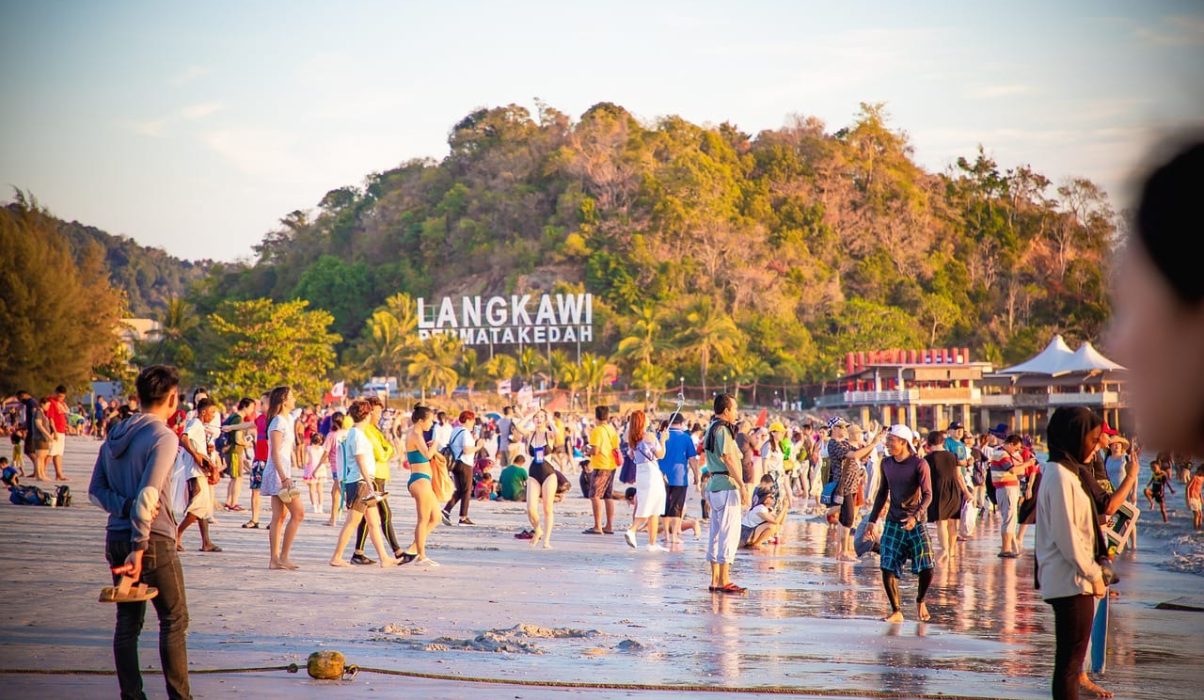
For the final leg of your 2 weeks itinerary Malaysia, it is time to slow down. Langkawi is an archipelago of 99 islands offering pristine nature and duty-free shopping.
Getting There
The quickest way from Penang to Langkawi is a short 30-minute flight. Ferries are available, but the sea can be choppy.
Day 11: Beach Bliss
Drop your bags and head straight to the water. You are likely looking for the best beaches in Langkawi to unwind. Pantai Cenang is the most popular choice. It’s lively, filled with beach bars, and perfect for watching the sunset with a cocktail in hand. It’s definitely one of the best beaches in Langkawi if you love people-watching and fire shows.
Day 12: Island Hopping and Eagles
Book a boat tour to explore the Kilim Karst Geoforest Park. You’ll see limestone cliffs, bat caves, and the iconic eagle feeding. In the afternoon, explore Tanjung Rhu. Many luxury travelers consider this one of the best beaches in Langkawi due to its crystal-clear water and seclusion away from the crowds.
Day 13: Sky Bridge and Panoramas
Take the cable car up Mount Mat Cincang to walk on the Langkawi Sky Bridge. It’s a curved suspension bridge 660 meters above sea level. The views are unmatched.
Later, for a different vibe, visit Pantai Tengah. It sits just south of Cenang but offers a more relaxed atmosphere. It’s often listed among the best beaches in Langkawi for families who want peace without being too far from the action.
Day 14: Farewell Malaysia
Enjoy a final breakfast by the sea. If you have time before your flight, grab some duty-free chocolates. Most international flights depart from KL, so you will likely catch a short domestic flight back to KLIA to conclude your 2 weeks itinerary Malaysia.
Practical Tips for US, Australian, and Singaporean Travelers
Visa Requirements
- US & Australia: You generally get a 90-day visa-free entry. However, you must fill out the MDAC (Malaysia Digital Arrival Card) online 3 days before arrival.
- Singapore: No visa is needed, and you can use the automated gates for faster clearance.
Currency & Payments
The currency is the Malaysian Ringgit (MYR). Credit cards are widely accepted in KL and Penang, but cash is king for street food and small buses (like the kl to Cameron highlands bus if buying over the counter).
Connectivity
Pick up a SIM card at the airport (Maxis, Celcom, or Digi) for excellent 4G/5G coverage throughout your 2 weeks itinerary Malaysia.
Why This Itinerary Works
This 2 weeks itinerary Malaysia offers the perfect pacing. You start with the high energy of the capital, cool down in the mountains, soak up culture in Penang, and finish with total relaxation on the islands.
You will master the logistics, from finding the right kl to Cameron highlands bus to knowing exactly how to get to Penang Malaysia like a pro. You will also have experienced the best beaches in Langkawi and tasted the world’s best street food.
So, pack your bags. Malaysia awaits with open arms and endless adventures.
Alternative Stop: The Historical Charm of Malacca
If you are a history buff, you might feel a slight gap in your 2 weeks itinerary Malaysia. While Penang offers Chinese heritage and KL showcases the modern era, Malacca (Melaka) is where the colonial history of the Portuguese, Dutch, and British converges.
Located just a two-hour drive south of Kuala Lumpur, Malacca is easily doable as a day trip or a one-night stay. If you decide to add this to your schedule, you might sacrifice a day in Langkawi or KL. Walking through the Red Square (Dutch Square) and climbing up to the ruins of St. Paul’s Church offers a distinct European feel that contrasts beautifully with the rest of the country.
Don’t miss the Jonker Walk Night Market if you are there on a weekend. It is louder, tighter, and more intense than the markets in KL, offering unique Nyonya (Peranakan) cuisine that you won’t find easily elsewhere. Adding Malacca effectively rounds out the cultural depth of your 2 weeks itinerary Malaysia.
Budget Breakdown: What to Expect
For travelers from the US, Australia, and Singapore, Malaysia offers incredible value for money. However, knowing how to budget is key to enjoying a stress-free trip.
- Accommodation: You can find luxury 5-star hotels in KL for as low as USD $80–$100 per night, a fraction of what you would pay in New York or Sydney. Boutique heritage hotels in Penang average around USD $50–$70.
- Food: This is where you save the most. A plate of Char Koay Teow or Nasi Lemak at a hawker stall costs roughly USD $1.50 to $3.00. Even a sit-down meal in a mid-range restaurant rarely exceeds USD $15 per person.
- Transport: Domestic flights (like the one to Langkawi) are often under USD $30 if booked in advance. Ground transport is even cheaper. For instance, the kl to cameron highlands bus ticket usually costs around USD $8–$10. It is an incredibly affordable way to see the countryside.
What to Pack for the Tropical Weather
Packing for this trip requires a strategy. Malaysia is hot and humid year-round, with the exception of the Cameron Highlands.
- Breathable Fabrics: Cotton and linen are your best friends.
- Light Jacket: Essential for the Cameron Highlands where temps drop to 15°C (59°F) at night, and also for freezing shopping malls and the AC on the bus Kuala Lumpur to Cameron Highlands.
- Rain Gear: Sudden tropical downpours are common. A lightweight poncho or sturdy umbrella is a must-have in your day pack.
Posts you might be interested
-
 Best New Year Destinations to Visit in Malaysia/0 Comments
 -
-