Last Updated: January 24, 2026
Table of Contents
ToggleWhy the Best Burger in Malaysia Costs Less Than $2
To suggest that the best burger in Malaysia costs less than $2 USD might spark skepticism in a world dominated by expensive wagyu patties and brioche buns. Yet, the soul of Malaysian cuisine is not found in high-end bistros, but on the buzzing street corners of Kuala Lumpur. This is the domain of the Ramly Burger—a national icon and a Malaysia food must-try.
Far from a standard fast-food item, this greasy, umami-packed masterpiece defies its humble price tag of roughly 8 Ringgit. Whether you are a backpacker or a luxury traveler, the search for authentic local flavor will inevitably lead you to a roadside stall and a wrapper soaked in savory sauces. In this guide, we explore why this street food phenomenon has captured the nation’s heart, how to order like a local, and where to find the ultimate late-night burger.
- A Burger in Malaysia is most famously defined by the Ramly Burger, a ubiquitous street food icon that costs less than $2 USD. Unlike Western gourmet counterparts, this Malaysian staple features a beef or chicken patty seasoned with distinct local spices, grilled in margarine, and wrapped in a thin egg omelet. Known as the "Ramly Special," it is typically topped with a signature combination of Worcestershire sauce, mayonnaise, and chili sauce, served in a toasted bun. It serves not just as a meal, but as a cultural institution and a definitive late-night comfort food in Kuala Lumpur and across the nation.
Frequently Asked Questions (FAQ)
1. Why is the Ramly burger banned in Singapore?
The authentic Ramly burger Malaysia beef patty is technically “banned” (or rather, not approved for import) in Singapore because the beef is often sourced from India, which is not on the Singapore Food Agency’s (SFA) approved list for beef imports. While you can find “Ramly-style” burgers in Singapore, they use different patty brands. To taste the original, legally sold Ramly patty, you must cross the border into Malaysia.
2. Is it safe to eat street food in Malaysia?
Generally, yes. Eating a burger in Malaysia from a roadside stall is considered safe because the meat and eggs are cooked to order at very high temperatures, killing bacteria instantly. However, if you have a sensitive stomach, you may want to avoid uncooked garnishes like lettuce or cucumber.
3. What makes a Ramly Burger unique?
The defining feature of this Malaysia food must try is the “Special” preparation method. Unlike Western burgers, the patty is seasoned with Maggi sauce and curry powder while grilling, then wrapped in a thin egg omelet parcel. It is finally “banjir” (flooded) with a mix of chili sauce, mayonnaise, and Worcestershire sauce, creating a sloppy, umami-rich texture you cannot find elsewhere.
4. What kind of meat is in a Ramly Burger?
The most common options at any stall are Daging (Beef) and Ayam (Chicken). The patties are processed locally and known for their soft texture. Some stalls also offer Lamb (Kambing), Fish (Ikan), or Prawn (Udang), but the classic experience is the beef or chicken “Special.”
5. Is Ramly Burger halal?
Yes. The Ramly brand was founded by Ramly bin Mokni specifically to provide guaranteed Halal meat products for Muslims. It is 100% Halal-certified. This makes the street burger in Kuala Lumpur and across the country a highly inclusive meal enjoyed by Malaysia’s Muslim majority and tourists alike.
The Legend of the Streetside Burger
To understand the burger in Malaysia, you must first understand the legend behind the name: Ramly.
Unlike the standardized, mass-produced patties of global fast-food chains, the ramly burger malaysia phenomenon is built on a unique business model. It started in 1979, founded by a butcher named Ramly bin Mokni. At the time, there was a gap in the market for Halal-certified Western food. He started making patties manually at home with his wife to ensure they were 100% Halal and hygienic.
Today, “Ramly” is a brand of frozen patties (chicken, beef, and lamb) sold in supermarkets, but the magic lies in the independent stall operators. These micro-entrepreneurs buy the patties, but the art is in the cooking. There are thousands of these stalls across the country, usually opening only after the sun goes down.
When you eat a burger in Malaysia, you aren’t just eating a sandwich; you are supporting a local “Abang” (brother) who has likely spent years perfecting his own secret ratio of sauces and seasonings. This decentralized creativity is why no two Ramly burgers taste exactly the same, yet they all share a familiar, comforting DNA.
Anatomy of the Perfect Malaysian Street Burger
What makes a burger in Malaysia distinct from a Quarter Pounder or a Whopper? It comes down to the “Special.”
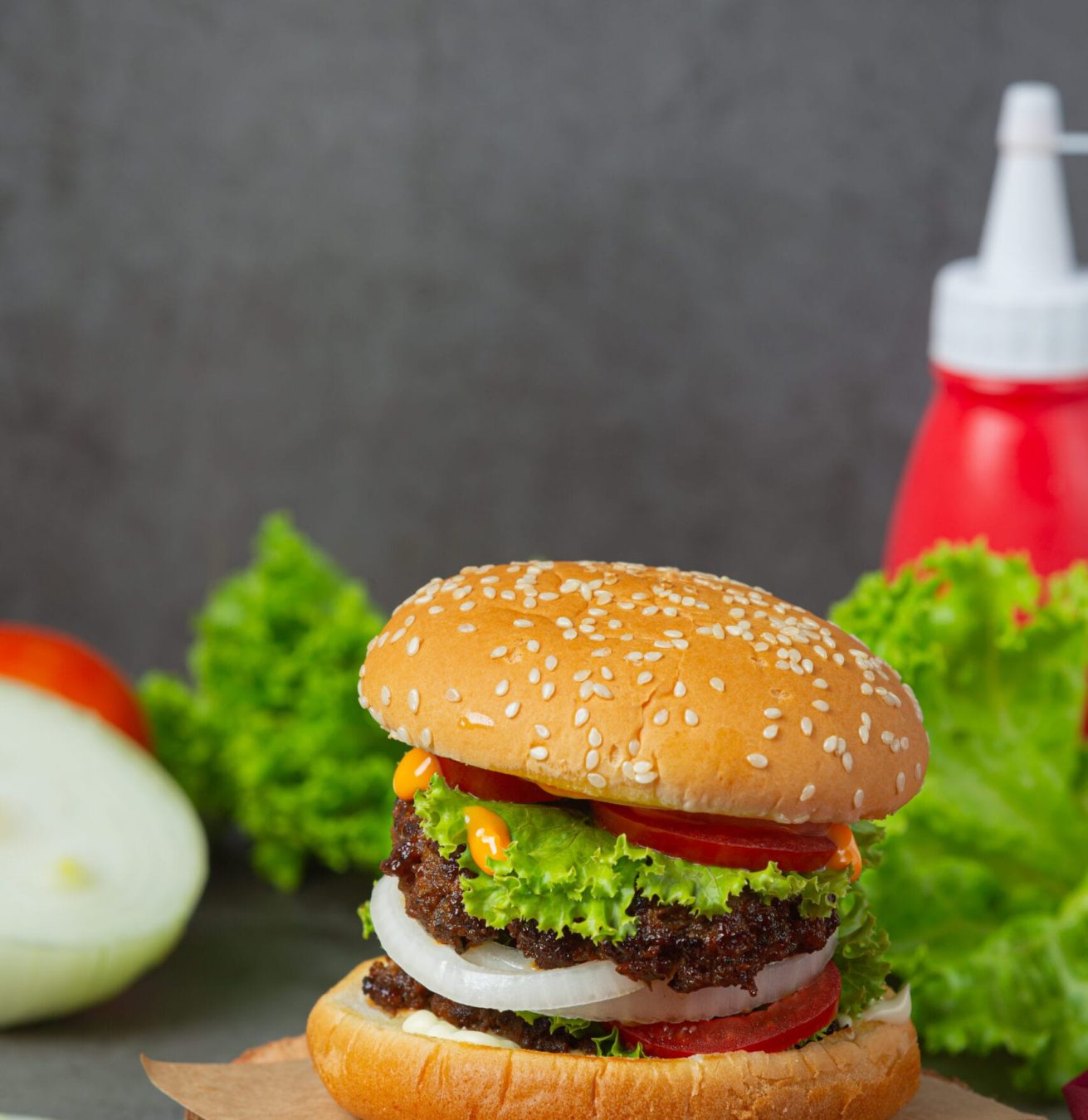
If you order a “Ramly Burger Special,” you are witnessing a culinary ballet. The cook doesn’t just grill the patty; they transform it. Here is the step-by-step anatomy of what you get for your $2:
1. The Seasoning Ritual
The frozen patty is thrown onto a hot, flat iron griddle generously greased with margarine—never butter, never oil. As it sizzles, the cook slices the patty down the middle (but not all the way through) to butterfly it, increasing the surface area. Then comes the seasoning: dashes of Maggi seasoning (a soy-based flavor enhancer) and liberal shakes of white pepper and a special curry powder mix.
2. The Egg Wrap (The “Special”)
This is the defining feature of the ramly burger Malaysia. The cook cracks an egg onto the hot plate and spreads it thin, like a crepe. The cooked, seasoned patty is placed in the center of the egg. With lightning-fast spatula work, the cook folds the edges of the egg over the patty, creating a neat, golden parcel. The meat is now completely encased in an omelet.
3. The Sauce Explosion
The bun is toasted on the same margarine-soaked grill. Then, the sauces are applied. We aren’t talking about a dab of ketchup. A proper burger in Malaysia is “banjir” (flooded). The standard trinity includes chili sauce (which is sweet and spicy, unlike American chili sauce), mayonnaise, and Worcestershire sauce. Some stalls add black pepper sauce or cheese sauce.
4. The Vegetable Crunch
Finally, a pinch of shredded cabbage, cucumbers, and onions is added for texture. The result is a sloppy, juicy, sweet, savory, and spicy mess that is impossible to eat without getting your hands dirty.
The Price Tag: How is it So Cheap?
You might be wondering how a burger in Malaysia can remain under the $2 mark (approx. RM9) despite global inflation.
The answer lies in the volume and the ingredients. The patties are locally produced and processed, keeping supply chain costs low. The stalls have minimal overhead—no rent for a fancy building, no air conditioning, and often just a single operator or a small family team.
Furthermore, the burger in Malaysia is a volume game. A popular stall in a busy area like Bangsar or Damansara can flip hundreds of burgers in a single night. This accessibility is vital. In a country with a wide income gap, the Ramly stall is the great equalizer. You will see Mercedes Benzes parked next to motorbikes, with everyone waiting in the same line for their supper.
For travelers from Singapore, where street stalls are strictly regulated and often moved into hawker centers, the raw, roadside nature of the ramly burger Malaysia is a nostalgic throwback. In fact, due to import regulations on the specific additives in the patties, the “authentic” Ramly patty is technically not available in Singapore, making the trip across the border a pilgrimage for the real deal.
The Hunt: Where to Find the Best Burger in Kuala Lumpur
While you can find a stall on almost every corner, some legends rise above the rest. If you are hunting for the best burger in Kuala Lumpur, you need to visit these titans of the street food scene.
1. Om Burger (Ampang)
Located in front of a 7-11 in Ukay Heights, Om Burger has been an institution for over two decades. This is not for the faint of heart. Om Burger is famous for its “sampah” (rubbish) style—a term used affectionately to describe how messy and loosely constructed the burger is. The patties are often cooked in a pool of margarine and oil, resulting in a burger in Malaysia that practically dissolves in your mouth.
- Must Try: Beef Special Cheese.
- Vibe: Chaotic, smoky, and authentically local.
2. Brader John (Damansara Uptown)
If you ask a local where to get a premium street burger in kuala lumpur, they will likely point you to Brader John. Located in the bustling commercial hub of Damansara, the queue here can last up to an hour. Brader John is known for his “Master Burger,” which uses two patties and a secret sauce blend that is slightly more refined than the average stall.
- Must Try: The Master Burger (creates a flavor profile closer to a gourmet stack but with street soul).
- Tip: Go early, around 9:00 PM, to avoid the post-clubbing rush.
3. Burger Kaw Kaw (Wangsa Maju)
For those who want a burger in Malaysia that pushes the boundaries of size, Burger Kaw Kaw is the pioneer of the “tower” burger. While their massive stacks cost more than $2, their original single patties remain affordable and delicious. They grill their homemade patties (no frozen pucks here) over an open flame, giving them a smoky char that is rare in the street scene.
- Must Try: Their classic grilled beef burger.
Culture Shock: The "Lepak" Lifestyle
Eating a burger in Malaysia is about more than just sustenance; it is about the Lepak culture. “Lepak” roughly translates to hanging out or chilling aimlessly.
In the United States or Australia, burgers are often dinner or a quick lunch. In Malaysia, the ramly burger Malaysia is the king of “Supper.” Supper is a distinct fourth meal of the day, usually consumed between 10:00 PM and 2:00 AM.
The humidity of the Malaysian night, combined with the spicy, heavy food, induces a specific kind of food coma. It is common to see groups of friends sitting on plastic stools by the roadside until 3:00 AM, discussing politics, football, or ghost stories, all fueled by these greasy burgers. If you want to truly experience the country, you must participate in this ritual. It is a Malaysia food must try experience that connects you with the heartbeat of the local youth.
A Guide for the Uninitiated Traveler
For a tourist from the West, approaching a street stall can be intimidating. There is no printed menu, just a banner with prices. Here is a glossary to help you order your first burger in Malaysia:
- Ayam: Chicken.
- Daging: Beef. (Note: Pork is never sold at Ramly stalls as they are Halal).
- Biasa: Standard (Bun + Patty + Cucumber/Cabbage + Sauce).
- Special: The patty is wrapped in an egg (The recommended choice).
- Double: Two patties.
- Cheese: A slice of processed cheddar is added.
- Kahwin: “Marriage.” This means mixing two types of meat, usually one beef patty and one chicken patty in a Double.
- Tak Nak Sayur: “I don’t want vegetables.” Use this if you want to avoid the cabbage.
Hygiene Note for Travelers: Is it safe? generally, yes. Because the burger in Malaysia is cooked to order at high temperatures on a griddle, bacteria are killed instantly. However, if you have a sensitive stomach, you might want to skip the lettuce or cucumber, as these are uncooked. But for the vast majority of travelers, the Ramly burger is a safe and joyous indulgence.
Gourmet vs. Street: The Burger Wars
In recent years, a wave of hipster burger joints like myBurgerLab and Spade’s Burger has taken over the major cities. They offer bamboo charcoal buns, caramelized onions, and Australian beef. While these are delicious, they cannot replace the street burger in Kuala Lumpur.
There is a distinct flavor profile to the street burger—a mix of Worcestershire sauce, Maggi seasoning, and sweet chili—that gourmet joints try to replicate but often fail. The “cheapness” is a feature, not a bug. The softness of the commercial bun, which steams slightly in the wrapper, combines with the egg and sauce to create a texture that is soft, comforting, and nostalgic.
When you pay $15 for a gourmet burger, you analyze the quality of the beef. When you pay $1.50 for a burger in Malaysia, you simply close your eyes and enjoy the ride. It is unpretentious honest food.
Why This is a "Malaysia Food Must Try"
If you are planning a trip to Southeast Asia, your itinerary is likely full of Nasi Lemak, Laksa, and Satay. These are undeniable classics. However, leaving the country without trying a burger in Malaysia is a mistake.
It represents the fusion of Western influence and Malaysian innovation. It shows how Malaysians can take a foreign concept (the hamburger) and completely indigenize it with local spices, cooking styles, and sauces until it becomes something entirely new. The ramly burger Malaysia is a symbol of Malaysian resourcefulness and their unyielding love for strong flavors.
For the Australian traveler accustomed to beetroot on burgers, or the American used to mustard and pickles, the Malaysian version offers a palate reset. It is sweeter, spicier, and softer. It is a flavor profile you will find yourself craving long after you have returned home.
Conclusion: The Best $2 You Will Ever Spend
The next time you find yourself wandering the streets of Kuala Lumpur after midnight, look for the glow of a stall and the queue of hungry locals. Don’t be deterred by the lack of white tablecloths. Join the line.
Order a “Daging Special Cheese.” Watch the master craftsman behind the grill execute the egg wrap with the precision of a surgeon. Pay your RM 8 (less than $2). Unwrap the paper and take a bite.
You will quickly realize that the best burger in Malaysia isn’t found in a Michelin guide. It is found right here, on the street, and it costs less than a cup of coffee. It is, without a doubt, a Malaysia food must try that defines the soul of the country.
Malaysia Food & Dining Guide: Best Restaurants, Kopitiams & Street Food
Explore our complete collection of best restaurants and kopitiams and street food:
Best Restaurants, Kopitiams & Street Food
- Top 10 Best Malaysia restaurants you can try
- Top 6 Authentic Malaysia Night Markets
- Where to Find the Best Christmas appetizers in Malaysia This December
- Top 5 Sabah Food You Must Try – A Taste of Borneo
- Heritage Food and Drink: Malaysia’s Family Tradition
- Delicious Discoveries: Best Food at State Fair in Malaysia
- Exotic Malaysia Fruit: Nature’s Colorful Tropical Gems
- Why the Best Burger in Malaysia Costs Less Than $2
- 7 Amazing Facts about Kopitiams in Malaysia