Penang’s Clan Jetties: Living on the Water
Imagine a place where the front porch isn’t made of concrete, but of weathered timber planks hovering above the sea. The scent of salt water mixes with the aroma of frying noodles and burning joss sticks. The sound of city traffic is replaced by the rhythmic lapping of waves against wooden stilts. This isn’t a movie set; it is the living heritage of the Clan Jetties, and specifically, the vibrant atmosphere of the Penang clan jetties.
Table of Contents
ToggleFor travelers from the United States, Australia, and Singapore seeking authentic cultural immersion, Georgetown offers a treasure trove of history. However, few places capture the resilience and community spirit of the Chinese diaspora quite like these floating villages. While the modern world rises in skyscrapers behind them, the residents of the Penang jetty chew continue a lifestyle that has persevered for over a century.
In this guide, we will take a deep dive into the history, the culture, and the essential travel tips for visiting this unique waterfront in Georgetown. Whether you are a history buff, a photographer chasing the perfect sunset, or a foodie looking for local treats, the jetties promise an unforgettable experience.
Frequently Asked Questions (FAQ)
1. What is the best time to visit Chew Jetty?
The best time to visit the Penang jetty chew is early in the morning (around 9:00 AM) if you want to avoid the tropical heat and large tour groups. However, for photographers, the “golden hour” just before sunset (around 7:00 PM) offers stunning lighting over the water.
2. What's the best way to experience Chew Jetty?
To truly experience the Penang jetties, take a slow walk down the main wooden walkway to the very end to see the Temple of the Jade Emperor. Along the way, support the locals by buying a refreshing drink or souvenir. Remember to respect the residents’ privacy by not entering homes without permission.
3. Is there an entrance fee to Chew Jetty?
No, there is no entrance fee. The Penang jetties is open to the public for free. It is a living community, so while entry is free, purchasing small items from the family-run stalls helps support the maintenance of the wooden walkways.
4. Is Penang Hill accessible for people with disabilities?
Yes, Penang Hill is wheelchair accessible. Unlike the rustic wooden planks of the Penang jetty chew, Penang Hill features a modern funicular train that accommodates wheelchairs. There are also ramps and accessible restrooms at the upper station, making it easier for travelers with mobility issues to enjoy the views.
5. Why is Chew Jetty famous?
The Penang jetties is famous for being the largest and most well-preserved of the Clan Jetties in Georgetown. It is a celebrated part of the Georgetown Penang UNESCO world heritage site, recognized as a living testament to the Chinese immigrant “floating villages” that have survived on stilts for over a century.
A Stroll Through History: The Origins of the Clans
To truly appreciate the Penang jetty chew, you must first understand the history of Chinese immigration in Malaya. In the 19th century, waves of immigrants arrived from the Fujian province of China, seeking work at the bustling port of Penang. These laborers worked as coolies, boatmen, and fishermen.
Facing a housing shortage and unable to afford land, these immigrants built their homes on stilts over the mudflats. They grouped themselves according to their surnames (clans) to provide mutual support and protection. What started as humble wooden shacks eventually grew into elaborate settlements.
Today, these settlements are a vital part of the Georgetown Penang UNESCO world heritage site. While there were once many more, only six distinct clan jetties remain today: Lim, Tan, Yeoh, Koay, Lee, and the most famous of them all, Chew.
For the modern traveler, the Penang jetty chew serves as a living museum. Unlike static exhibits, this is a breathing community where families have lived for generations. It is a testament to survival and adaptation, evolving from a rough settlement for laborers into a celebrated cultural icon.
Why Chew Jetty Stands Out
Among the remaining clan jetties, the Chew Jetty is the largest, longest, and most visitor-friendly. When tourists ask about the “floating village,” they are almost always referred to the Penang jetty chew. The Chew clan hails from the Tong An district in Xiamen, China, and their jetty has become the commercial heart of the waterfront settlements.
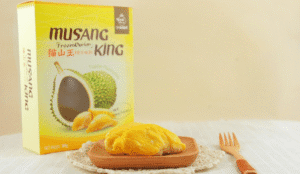
Walking down the main timber walkway of the Penang jetties, you are immediately struck by the juxtaposition of the old and the new. On one side, you might see an elderly resident mending a fishing net or watching a Chinese opera on an old television. On the other side, a younger family member might be selling durian puffs, souvenir magnets, or serving bowls of “big bowl” noodles to eager visitors.
This commercialization is exactly what makes the Penang jetties so accessible. It welcomes visitors with open arms (and open shops), unlike some of the quieter jetties that are strictly residential. It creates a bridge between the tourist and the local, allowing you to step into their world, even if just for an hour.
The Architecture of a Penang Floating Village
The architectural ingenuity of a Penang floating village is fascinating. The houses are built on Bakau piles (mangrove timber), which are known for their resistance to saltwater rot. Every few years, these piles must be replaced—a community effort that requires skill and timing with the tides.
As you explore the Penang jetties, notice the layout. The main walkway acts as the “street,” with smaller branches leading to individual homes. The houses typically have a front hall for the altar (honoring ancestors and deities), a living area, bedrooms, and a kitchen at the back that often opens directly to the sea.
While the exterior looks traditional, the interiors of the Penang clan jetties homes are modern. They are equipped with electricity, running water, air conditioning, and high-speed internet. It is a unique blend of heritage aesthetics and modern convenience, situated right on the waterfront in Georgetown.
Spiritual Anchors: The Temple of the Jade Emperor
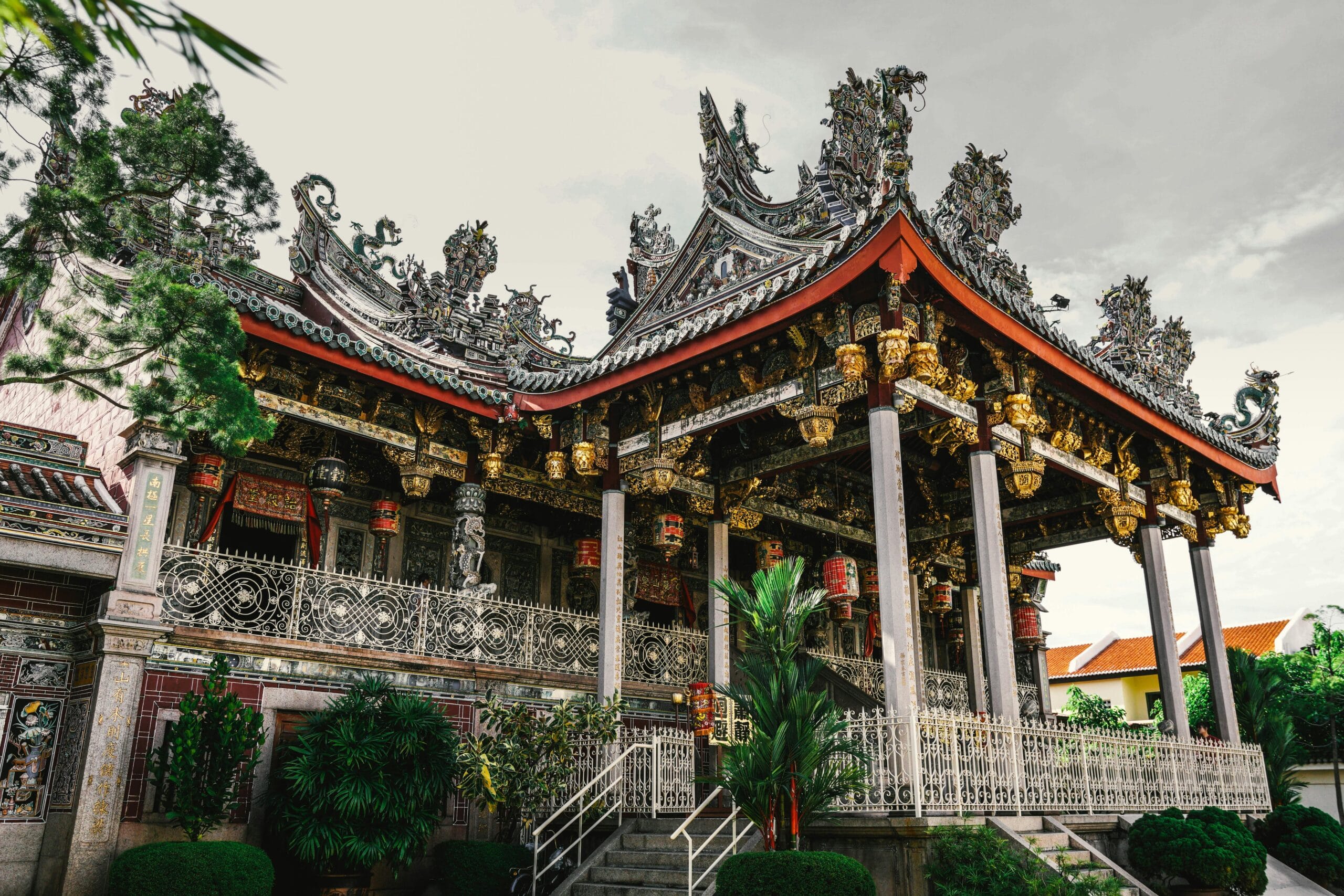
Religion plays a central role in the lives of the jetty residents. At the very end of the Penang jetties, where the wooden planks meet the open sea, stands the Temple of the Jade Emperor (Chew Jetty Temple).
This temple is the spiritual heart of the Penang jetty chew. It offers a panoramic view of the harbor, with ferries passing by and the Penang Bridge visible in the distance. The breeze here is refreshing, providing a welcome respite from the humid tropical heat.
If you are lucky enough to visit during the ninth day of the Chinese New Year, the Penang clan jetties transforms. This is the Pai Ti Kong festival (Worship of the Jade Emperor). The jetty is decorated with sugarcane stalks, and long tables are laden with offerings of roast pig, fruits, and traditional cakes. It is a riot of color, noise, and devotion, showcasing the living culture of the chew jetty Georgetown.
Beyond Chew: Exploring the Other Clans
While the Penang clan jetties steals the spotlight, the neighboring jetties offer a different, more tranquil vibe. If you want to escape the crowds, take a short walk to the Tan Jetty.
The Tan Jetty is distinct because of its long wooden pier that extends far out into the water, ending in a small red hut. This is perhaps one of the most photographed spots on the waterfront in Georgetown. Unlike the bustle of the Penang jetty chew, the Tan Jetty is quiet. There are no souvenir shops here—just homes and the sound of the ocean.
Visiting these quieter jetties reminds you that this area is a residential zone first and a tourist attraction second. It balances the commercial energy of the Penang jetty chew with the peaceful reality of daily life in a Penang floating village.
How to Get to the Jetties
Navigating to the jetties is straightforward. Located at Pengkalan Weld (Weld Quay), they are just a stone’s throw away from the Penang Ferry Terminal. Whether you are staying in a heritage hotel in the buffer zone of the Georgetown Penang UNESCO world heritage site or a beach resort in Batu Ferringhi, getting here is easy.
Most ride-hailing apps (like Grab) will recognize “Chew Jetty” or ” Penang jetty chew ” as a destination. If you are taking the Rapid Penang bus, look for any bus heading to the Jetty terminal. From there, it is a short walk south along the main road.
As you approach, you will see the large temple archway marking the entrance to the Penang jetties. It is hard to miss. The area is walkable, making it a perfect stop on a day tour of the city’s heritage sites.
The Best Time to Visit
Timing is everything when visiting the Penang jetty chew. The jetties are open to the public from 9:00 AM to 9:00 PM, though individual shops may have their own hours.
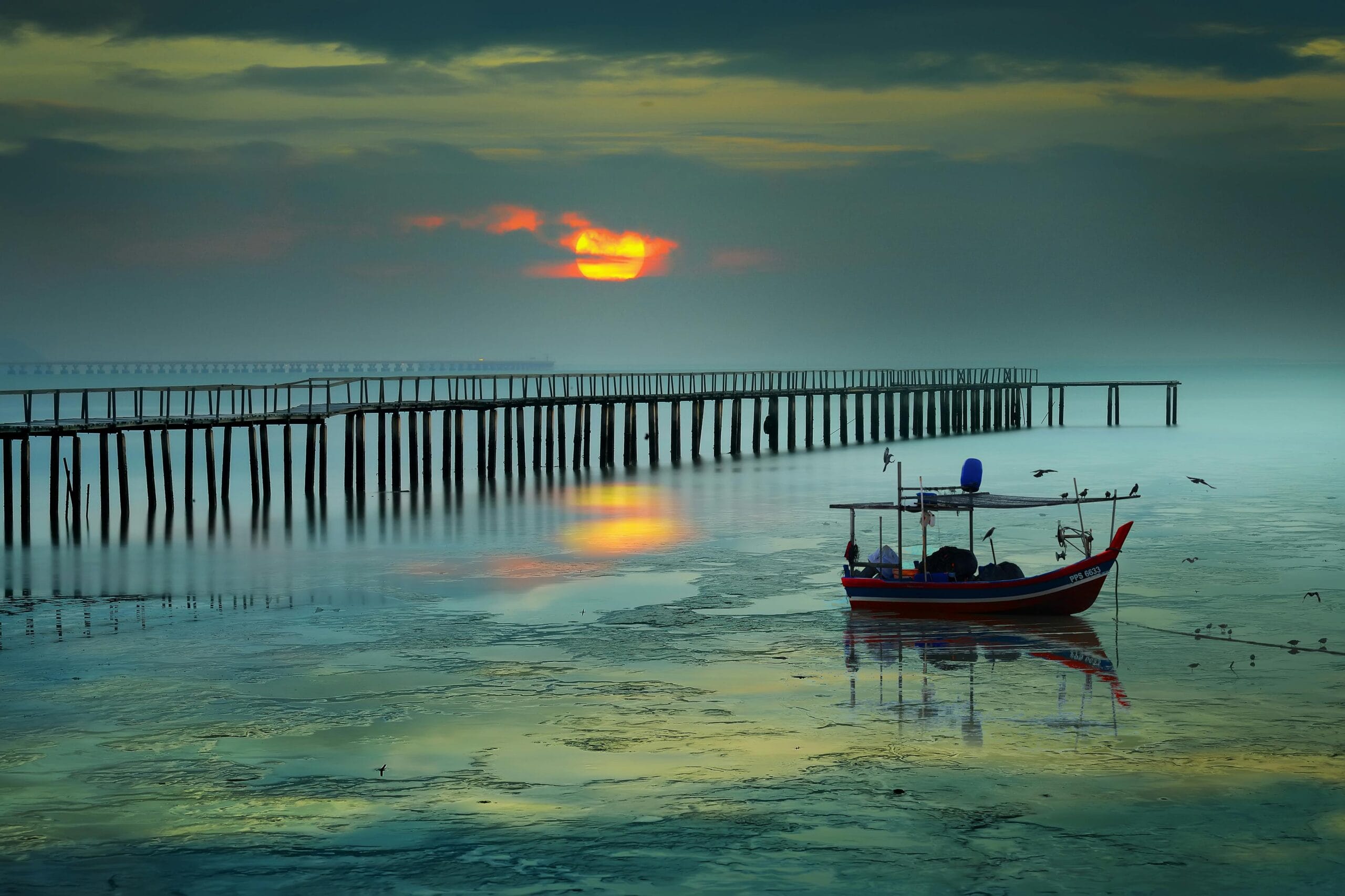
For photographers, the golden hour (just before sunset) is magical. The low light casts a warm glow on the wooden boats and the rippling water. The silhouette of the chew jetty Georgetown against a burning orange sky is an image you will want to capture.
However, if you want to avoid the heat and the tour buses, early morning (around 9:00 AM) is ideal. The air is cooler, and you can watch the residents of the Penang jetty chew starting their day—washing clothes, preparing food, or heading out to sea.
Avoid visiting the Penang clan jetties during high noon if you can help it. The lack of shade on the open walkways can make the tropical sun feel intense.
Responsible Tourism: Etiquette and Respect
It is vital to remember that the Penang clan jetties is private property that has been opened to the public. The residents are incredibly hospitable, but visitors must reciprocate with respect.
When walking through the Penang jetty chew, keep your voice down. Do not peek into open windows or doors unless invited. Do not photograph residents without asking for permission first.
The Penang floating village structures are made of wood; therefore, smoking is strictly discouraged in many areas due to fire hazards. Also, be mindful of your trash. The ocean is the backyard of the Penang clan jetties, and keeping it clean helps preserve the marine ecosystem and the aesthetics of the waterfront in Georgetown.
What to Eat: A Culinary Adventure
No trip to Penang is complete without food, and the Penang jetty chew area is surrounded by culinary delights. Inside the jetty itself, you will find vendors selling durian puffs, cut fruit, and refreshing herbal drinks.
Just across the road from the entrance of the Penang clan jetties is a famous food court. Here, you can try Penang’s signature dishes like Char Kway Teow (stir-fried flat noodles), Laksa, and Cendol. The proximity of the Penang jetty chew to these food havens makes it easy to spend half a day here—exploring the culture and then satisfying your appetite.
For a more atmospheric dining experience, look for seafood restaurants located near the chew jetty Georgetown entrance. Dining on fresh fish while looking out at the water you just walked over is the perfect way to cap off your visit.
Shopping for Souvenirs
The Penang jetties has evolved into a mini-market for tourists. While some may argue it takes away from the “ancient” feel, it supports the local economy. You can find batik clothing, handmade crafts, and typical Penang souvenirs.
If you are looking for something unique, keep an eye out for local art. Sometimes, local artists set up stalls along the Penang jetties walkway, selling postcards or sketches of the Georgetown Penang UNESCO world heritage site. Buying from them is a great way to support the local creative community.
Nearby Attractions
The Penang jetties does not exist in isolation. It is part of the rich tapestry of Georgetown. Within walking distance, you can find the Pinang Peranakan Mansion and the famous street art of Armenian Street.
You can easily plan a walking route that starts at the Khoo Kongsi clan house, winds through the street art, and ends at the Penang jetty chew for sunset. This connects the land-based heritage of the Georgetown Penang UNESCO world heritage site with its maritime counterpart.
The strategic location of the Penang jetties makes it the perfect anchor point for a day of exploration. You are never far from the next amazing sight or the next delicious meal.
The Future of the Jetties
The survival of the Penang jetty chew is a delicate balance. The younger generation often moves to the mainland for modern apartments and corporate jobs, leaving the older generation behind. However, the boom in tourism has breathed new life into the community.
Younger clan members are returning to the Penang jetty chew to run cafes, homestays, and souvenir shops. This economic incentive ensures that the wooden structures are maintained and the heritage is preserved.
By visiting the Penang jetty chew, you are actively contributing to the preservation of this unique lifestyle. Your interest validates the cultural importance of the chew jetty Georgetown, ensuring it remains a vibrant part of the city rather than a fading memory.
Photography Tips for the Jetties
For the Instagrammers and serious shutterbugs, the Penang jetty chew offers diverse textures and lighting conditions.
- Leading Lines: Use the long wooden walkways of the Penang jetty to create depth in your photos.
- Reflections: At high tide, the water under the stilts is calm, offering beautiful reflections of the wooden houses.
- Details: Zoom in on the details—the peeling paint, the red lanterns, the rusted anchors. These small elements tell the story of the Penang jetty chew.
- Wide Shots: Go to the end of the jetty to capture the vastness of the sea against the intimate clutter of the Penang floating village.
Practical Information Summary
- Location: Weld Quay (Pengkalan Weld), Georgetown, Penang.
- Entry Fee: Free.
- Opening Hours: 9:00 AM – 9:00 PM (Daily).
- Main Attraction: The Penang jetty chew walkway and the temple at the end.
- What to Wear: Light, breathable clothing and comfortable walking shoes. The wooden planks can be uneven.
Living Heritage in a Modern World
In a world that is rapidly modernizing, places like the Penang jetty chew are rare gems. They remind us of a simpler time when communities were built on mutual reliance and kinship.
The Penang jetty chew is more than just a photo opportunity; it is a lesson in history, anthropology, and resilience. It is a place where the boundary between land and sea blurs, and where the past and present coexist in harmony.
Whether you are marveling at the stilt architecture, lighting a joss stick at the temple, or simply enjoying the sea breeze, the Penang jetty chew offers a connection to the soul of Penang.
Why the UNESCO Status Matters
The designation of the Georgetown Penang UNESCO world heritage site in 2008 was a turning point for the jetties. It brought international attention and much-needed funding for preservation.
Before this, the jetties were often viewed merely as squatter settlements facing potential demolition. The UNESCO status validated the cultural significance of the Penang jetty and its neighbors. It highlighted the jetties as an essential component of the city’s multicultural narrative.
Today, when you walk through the Penang jetty chew, you are walking through a protected heritage zone. This status ensures that the unique character of the waterfront in Georgetown remains for future generations to appreciate.
The Sensory Experience
Close your eyes for a moment when you reach the end of the Penang jetties. You can hear the hum of the city behind you and the vast silence of the ocean before you. The smell of saltwater is sharp and cleansing.
This sensory experience is what sticks with travelers long after they leave. The Penang jetty chew is not just a sight; it is a feeling. It is the feeling of swaying slightly with the tides and the warmth of a community that has weathered storms and modernization alike.
Connecting with Locals
One of the most rewarding aspects of visiting the Penang jetty chew is the chance to chat with the locals. Many of the older generation speak Hokkien and a bit of English. A smile and a friendly nod go a long way.
Ask them about the history of their specific house in the Penang jetty chew. Ask them about the changes they have seen along the waterfront in Georgetown. Their stories add a layer of depth to your visit that no guidebook can provide.
Conclusion: A Must-Visit Destination
Penang is a destination of endless wonders, from its colonial architecture to its world-famous street food. Yet, the Penang jetty chew holds a special place in the heart of the island. It is a symbol of the immigrant spirit—of building a home where there was none, and thriving against the odds.
For travelers from the US, Singapore, and Australia, the Penang jetty chew offers a glimpse into a way of life that is disappearing elsewhere in Asia. It is raw, authentic, and incredibly photogenic.
So, when you plan your itinerary for the Georgetown Penang UNESCO world heritage site, make sure to carve out time for the Clan Jetties. Walk the planks, eat the food, and soak in the atmosphere of the Penang jetties. It is an experience that will ground you in the history of this magnificent island and leave you with memories of life on the water.
Don’t just see Penang; experience its living history at the Penang jetties.
Malaysian Communities and Lifestyles: From Rural Traditions to Modern Living
To truly know Malaysia, you must know its people. From the stilt houses of Penang’s clan jetties to the vibrant rhythm of Kuala Lumpur’s street performers, explore the unique communities and lifestyles that define the soul of the nation:
Traditional & Rural Roots
- Kampong:Malaysia’s Astounding Culture
- Village Life Activities: Kampung Hosts and Their Tourism Stories
- Why Rural Development Matters: Live and Community
- Penang’s Clan Jetties: Living on the Water
Modern Voices & Urban Life
- Street Busker Kuala Lumpur: The Hidden Art of Malaysia’s Music Scene
- Complete 2025 Guide to MM2H Malaysia: Requirements & Costs
- Malaysia’s Sports Heroes and Their Impact
- Malaysia Tourism: Awe-Inspiring Entreprenuers
- The Living Legend: Robert Kuok at 102