The Wet Bathroom Guide: Surviving and Thriving with Toilets in Malaysia
If you are traveling from the United States, Australia, or Singapore, you are likely accustomed to dry floors, unlimited toilet paper, and sitting down to do your business. However, touching down in Southeast Asia requires a slight shift in expectations. Understanding the culture of toilets in Malaysia is about more than just hygiene; it is a fascinating dive into local customs, religious traditions, and practical infrastructure.
Table of Contents
ToggleFor the uninitiated, walking into a Malaysian restroom can be a sensory surprise. The floors are often wet, the toilet paper might be missing, and there may be a hose attached to the wall. Don’t panic. By the end of this guide, you will be navigating the local “loo” like a pro.
Frequently Asked Questions (FAQ)
1. Are there western toilets in Malaysia?
Yes, you will find Western sit-down toilets in hotels, shopping malls, and airports. However, traditional squat toilets in Malaysia are still common in rural areas, gas stations, and older public buildings.
2. Do they use toilet paper in Malaysia?
Not always. Most locals prefer using water and a bidet hose for hygiene. Public restrooms often do not provide paper inside the stalls, so it is highly recommended to carry your own tissues or wet wipes.
3. Which country has the cleanest bathrooms?
Japan and Singapore consistently rank as having the cleanest restrooms globally. While high-end toilets in Malaysia (like in KL malls) are excellent, public facilities can be “wet” and vary in cleanliness compared to their neighbors.
4. How much does it cost to install a toilet in Malaysia?
The cost to purchase and install a standard toilet bowl typically ranges from RM 300 to RM 800 (approx. $70–$180 USD). High-end smart toilets or complex plumbing work will increase the price significantly.
5. What are public toilets like in Malaysia?
Public toilets in Malaysia are often “wet bathrooms” due to the culture of washing with water. Expect wet floors, a bidet hose in every stall, and a small entry fee (usually 30 to 50 sen) at tourist spots.
The "Wet" Bathroom Phenomenon
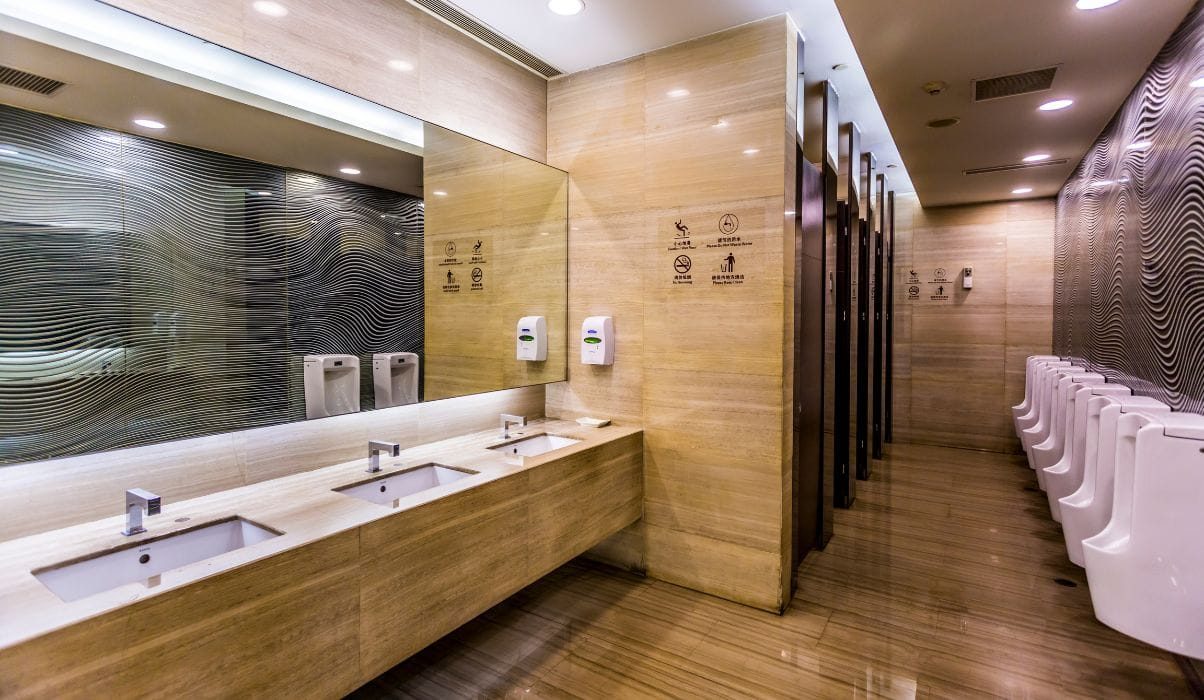
The first thing you will notice about toilets in Malaysia is that the floor is almost always wet. For a Western traveler, a wet bathroom floor usually signals a plumbing disaster or a lack of cleanliness. In Malaysia, however, it usually means the exact opposite: the bathroom has recently been cleaned or used by someone practicing high standards of hygiene.
This is largely due to the widespread use of water for cleansing. In local culture, particularly among the Muslim majority, using water is considered the only way to be truly clean (a practice known as Istinja). Consequently, water is splashed liberally to clean oneself and the stall after use. While it might be tricky to keep your pant hems dry, remember that the water signifies a wash-centric culture rather than a messy one.
The Hardware: Squat vs. Sit
Malaysia is a nation in transition, bridging the gap between traditional kampungs (villages) and ultramodern skyscrapers. This contrast is vividly reflected in the toilets in Malaysia, where you will encounter two main distinct styles.
The Western Sit-Down
In hotels, shopping malls like Pavilion KL, and modern cafes, you will find standard Western-style pedestal toilets. These function exactly as you would expect, though they are almost always accompanied by a water hose (more on that later).
The Traditional Squat
In older establishments, gas stations (locally called “R&Rs”), and public parks, you are likely to encounter the squat toilet Malaysia is famous for. For many Westerners, this porcelain pan set into the floor looks intimidating.
To use a squat toilet Malaysia style effectively, follow these steps:
- Secure your belongings: Ensure your phone and wallet are safe in a bag, not in shallow pockets.
- Position your feet: Place your feet on the grooved footrests on either side of the hole.
- The squat: Lower yourself down fully. Believe it or not, this position is scientifically proven to be better for your colon alignment than sitting!
- Balance: If you aren’t used to squatting, look for a hook or rail to stabilize yourself, or simply keep your knees close to your chest.
The Magic of the "Bum Gun" (Handheld Bidet)
Perhaps the greatest invention you will encounter when visiting toilets in Malaysia is the handheld bidet sprayer. Colloquially known by expats as the “bum gun,” this device is a game-changer for personal hygiene.
A bidet hose is a trigger-operated nozzle attached to the wall next to the toilet. If you are used to dry toilet paper, the idea of spraying water might seem strange, but it is incredibly refreshing in the humid tropical climate.
How to use the bidet hose:
- Test the pressure first! Some sprays are gentle; others are power washers in disguise. Squeeze the trigger slightly away from you to check.
- Reach around behind you (or between your legs, depending on preference) and aim the spray.
- Use your other hand (traditionally the left hand) to wash if necessary, or simply let the water pressure do the work.
- Dry off with a small amount of tissue if you have it, though many locals simply air dry or use a towel designated for this purpose at home.
Once you get used to the bidet hose, going back to dry paper alone often feels like a downgrade in hygiene.
The Great Toilet Paper Debate
Here is a golden rule for toilets in Malaysia: never assume there will be toilet paper.
Because water is the primary cleaning method, toilet paper is viewed as a drying aid rather than a cleaning tool. In many public restrooms, toilet paper dispensers are located outside the stalls near the sinks. You must gather the amount you need before you enter the cubicle.
Furthermore, the plumbing infrastructure in older buildings isn’t designed to handle large wads of cellulose. If you do use paper, look for a bin next to the toilet. If a bin is present, it is a strong hint that you should throw the paper in there, not flush it. Clogging a pipe is a surefire way to create an embarrassing situation.
Public Restroom Etiquette and Costs
When you are out exploring the street food of Penang or the heritage sites of Malacca, you will eventually need a public facility. Public toilets in Malaysia often operate on a user-pay system.
Expect to pay an entrance fee, usually between 30 cents (sen) to 50 sen. There will be a caretaker at a desk near the entrance to collect the money. This fee usually goes toward the salary of the cleaner and basic maintenance. Always keep some loose coins in your pocket for this reason.
While paid entry suggests a level of maintenance, quality varies. A restroom in a high-end Kuala Lumpur mall will be immaculate, often featuring automated bidets similar to Japan. Conversely, a free public toilet in a remote area might be quite rustic.
Hygiene Hacks for Travelers
If you are planning a long trip through the rainforests or rural areas, being prepared is key.
- Bring Your Own Paper: Always carry a pack of tissues or wet wipes in your daypack.
- Hand Sanitizer: While most toilets in Malaysia have sinks, soap is occasionally empty.
- The Portable Solution: If you become a convert to water washing but find yourself in a stall without a hose, you might struggle. Some seasoned travelers invest in a bum gun portable. These are small, squeeze-bottle devices with an angled nozzle that allow you to wash with water anywhere. A bum gun portable is particularly useful for hikers or families with small children who need to handle diaper changes on the go.
Embracing the Culture
It is easy to view the differences in bathroom habits as an inconvenience, but it is actually a reflection of the Malaysian lifestyle. The emphasis on water usage aligns with the hot, humid weather were feeling fresh is a constant battle.
Moreover, the infrastructure of toilets in Malaysia is evolving. New developments are prioritizing dry floor designs and hybrid systems that cater to both Eastern and Western preferences. You will increasingly find “dry” public restrooms in airports and luxury hotels that mimic the standards of Singapore or Australia.
Conclusion
Traveling is about stepping out of your comfort zone, and sometimes that applies to the most mundane activities. While the wet floors and the traditional squat toilet Malaysia utilizes might give you a momentary pause, they are easy to navigate with a little preparation.
Embrace the water culture. Give the bidet hose a try. Carry your coins and tissues, and you will find that navigating toilets in Malaysia is just another small, manageable part of your Southeast Asian adventure. Who knows? You might even return home wondering how you ever lived without a sprayer in your own bathroom.
Malaysia Travel Essentials: The Ultimate Guide to Culture, Language, & Local Life
For more information, this page connects to detailed guide to culture, language, and local life:
The Linguistic landscape
- The Evolution of Malaysia Language
- Malaysian Hokkien Language: Discover the culture
- Malaysian Cantonese Language: Origin and Facts
- Language Diversity in Malaysia: Its Culture and Heritage
Practical Cultural Etiquette
- Toilets in Malaysia: Traveler’s Guide to Squatting, Sprays, and Wet Floors