Tuak Rice Wine: The Sweet Malaysian Spirit That Packs a Punch
Imagine this: You are sitting on the rattan mat of a traditional longhouse deep in the rainforests of Borneo. The humidity is high, the crickets are chirping, and a friendly host hands you a small glass of cloudy, yellowish liquid. It smells sweet, almost like floral yeast. You take a sip. It tastes innocent—like a boozy rice pudding or a sweet dessert wine. You accept a second glass, then a third. An hour later, you try to stand up, only to realize your legs have turned to jelly.
Table of Contents
ToggleWelcome to the world of tuak rice wine.
For travelers from the United States, Singapore, or Australia exploring the culinary landscape of Southeast Asia, Tuak is often the “final boss” of traditional beverages. It is a drink steeped in centuries of indigenous culture, surrounded by mysticism, and famous for its deceptive potency.
In this guide, we will explore everything you need to know about tuak rice wine, from its tribal roots and flavor profile to the secrets of its production and why it is currently experiencing a massive revival in the modern craft alcohol scene.
Frequently Asked Questions (FAQ)
1. How does tuak taste?
Tuak rice wine is known for its pleasant, sweet, and often milky flavor profile. It tastes similar to a floral dessert wine or a sweet sake, with distinct notes of yeast and rice. Depending on how long it has been fermented, the taste can range from very sweet and mild (young Tuak) to dry, sour, and complex (aged Tuak).
2. Does rice wine have a lot of alcohol?
Yes, the potency can be surprising. Malaysian rice wine typically has an alcohol content ranging from 5% to 20% ABV (Alcohol By Volume). Because homemade versions are unregulated and often mask the alcohol taste with high sugar levels, it is famously known as a drink that “creeps” up on you.
3. What is Lihing Sabah?
Lihing is the traditional rice wine of the Kadazan-Dusun people in Sabah. In the lihing vs tuak comparison, Lihing is distinct because it is usually made with pulut (glutinous rice) and natural yeast (Sasad) without added sugar syrup, resulting in an amber-colored, earthier, and more organic taste compared to the sweeter, paler Sarawakian Tuak.
4. How is tuak made?
Learning how to make tuak involves a specific fermentation process. First, glutinous rice is cooked and cooled completely. It is then mixed with crushed “Ragi” (traditional yeast cakes) and left to ferment. After a few days, cooled sugar syrup is added to the mixture to feed the yeast, which produces the alcohol over the next few weeks.
5. How to store homemade rice wine?
If your tuak rice wine is unopened, it can be stored in a cool, dark place for months, where it will continue to age and darken. However, once you open the bottle, you must store it in the refrigerator and consume it within two weeks. If left at room temperature after opening, it will sour and turn into vinegar.
What Exactly is Tuak Rice Wine?
At its core, tuak rice wine is an indigenous alcoholic beverage made from the fermentation of glutinous rice (sticky rice), yeast, and sugar. While it is synonymous with the island of Borneo—specifically the Malaysian state of Sarawak—variations of this drink exist throughout the Malay Archipelago.
However, calling it just “wine” can be slightly misleading for Western palates. Unlike the grape wines of the Barossa Valley or Napa, tuak rice wine does not rely on fruit fermentation. Technically, it sits somewhere between a beer and a wine, similar to Japanese Sake, though the flavor profile is vastly different.
The alcohol content of tuak rice wine can vary wildly. Because it is largely a cottage industry product—often brewed in family homes rather than sterile factories—the Alcohol by Volume (ABV) can range from a mild 5% to a staggering 20%. This unpredictability is part of the adventure. One bottle might be a light palate cleanser; the next might be the one that knocks you out.
The Flavor Profile: What Does It Taste Like?
If you are used to the dry, crisp notes of a Chardonnay, tuak rice wine will be a shock to the system.
- Sweetness: Traditional Tuak is generally sweet, owing to the sugar added to feed the yeast.
- Acidity: As it ages, it develops a slight sourness, not unlike cider or kombucha.
- Texture: It can be clear or cloudy (containing rice sediment), with a mouthfeel that is often described as “silky” or slightly viscous.
The Cultural Heartbeat of Borneo
To understand tuak rice wine, you must understand the people who make it. It is the lifeblood of the Dayak people, the indigenous inhabitants of Borneo, specifically the Iban and Bidayuh tribes.
In these communities, tuak rice wine is not merely a social lubricant; it is a ritualistic tool. It is served during Gawai Dayak (the massive harvest festival usually held in June), at weddings, and to welcome guests into the longhouse. Rejecting a glass of tuak rice wine when offered by a host can be seen as a breach of etiquette, though modern hosts are increasingly understanding of teetotalers.
The Ritual of “Sadong”
If you are lucky enough to visit a longhouse, you might witness a “Sadong.” This is where a designated server goes down the line of guests, pouring shots of tuak rice wine for everyone. You must drink it when it is served to you. The communal aspect reinforces unity—everyone drinks the same batch, sharing the same spirit of the harvest.
Lihing vs Tuak: The Battle of the Bornean Brews
One of the most common questions from foodies exploring Malaysian rice wine is regarding the difference between the two titans of Borneo: Tuak and Lihing. While they are cousins, they are distinct, and confusing them is a mild faux pas in East Malaysia.
Here is the breakdown of lihing vs tuak:
1. Geography
- Tuak: Predominantly hails from Sarawak. It is the pride of the Iban and Bidayuh people.
- Lihing: Hails from Sabah (the northern state of Borneo). It is the traditional drink of the Kadazan-Dusun people.
2. Ingredients and Color
- Tuak: Usually made with glutinous rice and round yeast balls (Ragi). Sugar is often added in syrup form. The color ranges from pale yellow to golden brown.
- Lihing: Also made from glutinous rice (specifically pulut), but traditional Lihing relies heavily on a specific type of yeast (Sasad) and the natural sweetness of the rice conversion, though sugar is sometimes used. Lihing tends to be darker, amber-hued, and earthier.
3. Taste Profile
When discussing lihing vs tuak, the consensus is often that Lihing has a more organic, earthy, and sometimes woody taste, akin to a rustic sherry. Tuak rice wine, conversely, often leans fruitier, lighter, and sweeter, though “dry” versions (Tuak Masam) exist.
Both fall under the umbrella of Malaysian rice wine, and both are potent. If you are in a bar in Kuala Lumpur that serves native spirits, ordering a flight of both is the best way to understand the nuance of lihing vs tuak personally.
The Alchemy: How to Make Tuak
For the adventurous souls in the United States or Australia who brew their own beer or kombucha, you might be wondering how to make tuak. The process is deceptively simple in theory but difficult to master. The magic lies in the hygiene and the “Ragi” (yeast).
Note: In Malaysia, making Tuak for personal consumption is common cultural practice. If you attempt this in your home country, ensure you are complying with local home-brewing laws.
Here is the general method enthusiasts use when learning how to make tuak:
Phase 1: Preparation of the Rice
The base is always glutinous rice. You cannot use Jasmine or Basmati; the starch content isn’t right.
- Wash the rice until the water runs clear.
- Cook the rice in a rice cooker or steamer. It needs to be fully cooked but not mushy.
- Cooling: This is critical. The rice must be spread out on a tray to cool completely to room temperature. If it is too hot, it will kill the yeast.
Phase 2: The Ragi (Yeast)
The soul of tuak rice wine is the Ragi. These are dried cakes containing yeast, mold, and bacteria, often mixed with spices like cinnamon or ginger depending on the family recipe.
- Crush the Ragi balls into a fine powder.
- Sprinkle the powder evenly over the cooled rice.
Phase 3: Fermentation
- Place the rice and yeast mixture into a sterilized jar. This stage is aerobic (needs some air) for the first few days to allow the mold to break down the starch into sugar.
- Sugar Syrup: After a few days, a cooled sugar syrup (sugar dissolved in water) is added to the jar. This feeds the yeast, which converts the sugar into alcohol.
- Seal the jar (airlock recommended) and let it sit in a dark, cool place.
Phase 4: Harvesting
After 3 to 4 weeks, the liquid separates from the rice solids.
- Strain the liquid through a cheesecloth.
- Bottle the liquid.
While knowing how to make tuak sounds straightforward, local superstition plays a huge role. It is said that if you are angry, menstruating, or have a “bad spirit” while making it, the tuak rice wine will turn sour (become vinegar).
The "Knock Out" Factor: Why Is It So Strong?
Why does tuak rice wine have a reputation for flooring even the most seasoned drinkers?
1. Masked Potency
Because good tuak rice wine is sweet and lacks the harsh “burn” of cheap vodka or whiskey, it is incredibly easy to drink quickly. The sugar content masks the ethanol. You might consume three glasses in 20 minutes because it tastes like juice, only to have the alcohol hit your bloodstream all at once.
2. The “Hangover” Myth
There is a prevailing myth that tuak rice wine gives you the worst hangover of your life. This is only partially true. Pure, well-made tuak rice wine rarely causes a severe hangover because it lacks the chemical additives found in some commercial alcohols. However, “bad” Tuak—where hygiene was poor or too much sugar was used—can indeed leave you with a thumping headache.
3. Variable ABV
As mentioned, one batch might be 8% ABV, and the next might be 18%. Without standardized labeling on homemade bottles, you are effectively gambling with your tolerance every time you open a bottle of tuak rice wine.
The Modern Renaissance of Malaysian Rice Wine
For decades, tuak rice wine was seen as a “village drink”—something you only drank if you went back to the countryside. However, in the last five years, a massive rebranding has occurred.
Trendy bars in Kuala Lumpur, Penang, and even Singapore are now serving artisanal tuak rice wine. Young brewers are experimenting with infusions, moving beyond the traditional recipe.
New Wave Flavors
You can now find:
- Roselle Tuak: Infused with hibiscus flowers, giving it a ruby red color and tart flavor (similar to cranberry wine).
- Pineapple Tuak: Using local Sarawakian pineapples for a tropical twist.
- Black Pepper Tuak: Utilizing Sarawak’s famous black pepper for a spicy kick.
- Butterfly Pea Tuak: Naturally blue/purple and very Instagrammable.
This modernization is vital for the survival of the tradition. By elevating tuak rice wine to a premium product, it preserves the heritage while making it economically viable for the indigenous communities who produce it.
Tuak and Food Pairing
If you are a foodie planning a dinner party, tuak rice wine is a surprising and versatile pairing option. Because of its sweetness and acidity, it cuts through rich, fatty foods beautifully.
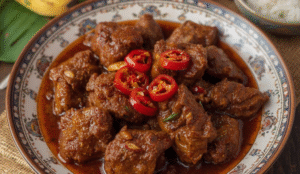
- Spicy Asian Food: The sweetness of tuak rice wine cools the tongue. Try it with a spicy Sambal prawn dish or a heavy Beef Rendang. The sugar creates a barrier against the chili heat.
- Traditional Dayak Cuisine: To go fully authentic, pair it with Manok Pansoh—chicken cooked inside bamboo with lemongrass and tapioca leaves. The herbal, smoky flavor of the chicken complements the yeastiness of the tuak rice wine.
- Western Desserts: Treat sweet Tuak like a dessert wine. It pairs exceptionally well with vanilla ice cream, cheesecake, or fruit tarts.
Where to Find Tuak (and How to Buy It)
If you are reading this from New York, Sydney, or London, finding tuak rice wine can be a challenge. It is not yet as globally exported as Japanese Sake or Korean Soju.
In Malaysia:
- Supermarkets: You generally won’t find high-quality Tuak in standard supermarkets (like Tesco or Aeon) in West Malaysia.
- Specialty Stores: Look for “Borneo Products” shops in Kuala Lumpur.
- Online: Many artisan brewers sell directly through Instagram or Shopee (within Malaysia).
International:
- Singapore: Due to proximity, several bars and distributors in Singapore now carry tuak rice wine.
- USA/Australia/UK: It is rare. Your best bet is looking for specific Malaysian cultural festivals or niche importers of Southeast Asian spirits.
Travel Tip: If you are flying out of Kuching (Sarawak) or Kota Kinabalu (Sabah), you can buy bottles at the airport. However, check your country’s customs regulations regarding bringing back Malaysian rice wine.
Safety Tips for the First-Time Drinker
If you find yourself with a bottle of tuak rice wine, keep these safety tips in mind to avoid the “knockout.”
- Shake Well: Tuak often has sediment at the bottom. This is natural rice flour and yeast. Shake it to ensure an even flavor, or let it settle if you prefer a clearer drink.
- Chill It: Tuak rice wine is best served cold. Warm Tuak can taste cloying and “soupy.”
- The Smell Test: It should smell yeasty, floral, and sweet. If it smells like nail polish remover or rotting garbage, pour it out. That indicates bad bacteria.
- Pace Yourself: Treat it like a strong cocktail, not a beer. The sugar rush combined with the alcohol can lead to a very sudden intoxication.
The Economics of Tuak
The production of tuak rice wine is a significant economic driver for rural women in Sarawak. In many longhouses, the brewing is traditionally managed by the women. By purchasing authentic tuak rice wine, you are directly supporting these cottage industries.
Interestingly, there is currently a push to obtain a “Geographical Indication” (GI) for Tuak, similar to how Champagne can only come from France or Tequila from Mexico. This would protect the integrity of tuak rice wine and ensure that mass-produced, fake versions do not flood the market.
Conclusion
Tuak is more than just a drink; it is a story in a bottle. It tells the tale of the rainforest, the harvest, and the communal spirit of the Dayak people. It is a beverage that defies easy categorization—simultaneously sweet and strong, simple and complex.
For the international traveler or the curious connoisseur, tuak rice wine represents an unexplored frontier in the world of alcohol. It challenges the palate and offers a genuine taste of Borneo that you cannot find in a standard hotel bar.
Whether you are debating the nuances of lihing vs tuak with a local in Sabah, or looking up how to make tuak in your kitchen in Melbourne, remember to respect the potency of this Malaysian rice wine. It is sweet, it is welcoming, but if you aren’t careful, it certainly will knock you out.
So, the next time you find yourself in Malaysia, skip the commercial beer. Seek out the cloudy bottle with the handwritten label. Pour a glass, say “Ooha!” (the traditional Iban toast), and savor the spirit of the harvest.
Complete Malaysian Drinks Resources
Explore the iconic beverages that define Malaysian culture, from mamak staples to traditional spirits: