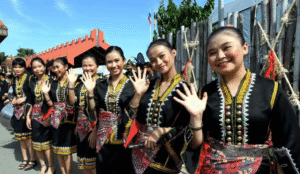
Bamboo Hallelujahs: Discovering the Soulful Bamboo Music of Borneo’s Jungle Churches
The morning mist clings tightly to the Crocker Range, creating a veil over the emerald valleys of Sabah, Malaysian Borneo. As the sun begins to burn through the fog, the sound of an engine struggling up a gravel hill is overtaken by something far more resonant, earthy, and profound. It isn’t the metallic peal of a bell, nor the synthesized chords of a modern keyboard. It is a deep, thrumming vibration that seems to rise from the soil itself.
Table of Contents
ToggleThis is the sound of bamboo music.
For travelers hailing from the concrete skylines of Singapore, the sprawling suburbs of Australia, or the bustling cities of the United States, Borneo offers a sensory reset. While the orangutans and diving spots usually steal the headlines, there is a cultural phenomenon hidden in the hills that provides a far deeper connection to the land and its people. It is the Sunday service in the interior, where the indigenous Christian communities—the Kadazan-Dusun, Murut, and Rungus people—worship not with organs, but with an orchestra of handcrafted bamboo.
In this guide, we will journey beyond the typical tourist trail to explore the unique bamboo music of Borneo, understanding its history, its spiritual significance, and how you can experience these “Bamboo Hallelujahs” for yourself.
Frequently Asked Questions (FAQ)
1. What is the history of bamboo music?
Bamboo music has ancient roots across Southeast Asia, Africa, and the Pacific, where the plant grows abundantly. Originally, it began as simple communication tools and instruments for animistic rituals, harvest celebrations, and mimicking nature. Over centuries, these primitive sounds evolved into complex orchestral traditions, such as the Angklung ensembles of Indonesia and the wind orchestras of the Philippines and Borneo.
2. What are bamboo musical instruments?
Bamboo musical instruments are wind (aerophones) or percussion (idiophones) devices crafted entirely from hollow bamboo stalks. Common examples include the suling (flute), angklung (shakers), tongatong (percussion tubes), and the sompoton (a mouth organ unique to Borneo). In the music of bamboo, these instruments are harvested from the jungle and treated to produce specific pitches.
3. What is a band that uses improvised instruments made of bamboo?
A group using improvised bamboo instruments is typically called a bamboo band or sometimes a musik bambu orchestra. These bands historically emerged in colonized regions (like the Philippines and Malaysia) where locals wanted to replicate Western brass bands but lacked the funds for metal instruments. They improvised by engineering bamboo of different sizes to mimic the sounds of trumpets, tubas, and clarinets.
4. What is the history of bamboo music in Sabah?
The history of bamboo music in Sabah is a blend of indigenous craftsmanship and colonial religious influence. While tribes like the Kadazan-Dusun always used bamboo for folk music, the modern bamboo band style became prominent in the mid-20th century. Local communities adapted Christian hymns brought by missionaries, playing them on bamboo instruments in the local jungle church, creating a unique cultural fusion that survives today.
5. Where is the best place to hear a live bamboo band in Borneo?
The best place to hear a live bamboo band is in the interior districts of Sabah, specifically Tambunan (known as the bamboo capital) and Keningau. While you might encounter performances at churches in Kota Kinabalu during the Harvest Festival (Kaamatan), the most authentic experience is found during Sunday worship services in the rural churches of the Crocker Range.
The Roots of the Rhythm: Where Culture Meets Faith
To truly appreciate the bamboo music echoing through these valleys, one must understand the unique tapestry of history and religion in Sabah. Unlike Peninsular Malaysia, which is predominantly Muslim, a significant portion of Sabah’s indigenous population identifies as Christian. When missionaries arrived in North Borneo in the late 19th and early 20th centuries, they brought hymns and theology, but the local people brought their heritage.
The Evolution of Indigenous Worship
In the old days, the rhythm of life in Borneo was dictated by the gong and the drum—instruments heavily tied to animistic rituals, headhunting ceremonies, and harvest spirits. As communities converted to Christianity, there was a complex negotiation of culture. While some traditional sounds were initially viewed with suspicion by early missionaries, bamboo music found a welcoming home in the church.
Bamboo was neutral, abundant, and capable of producing melodies that mimicked the Western diatonic scale required for hymns, yet it retained the “soul” of the jungle. Today, the music of bamboo serves as a bridge between the ancient identity of the tribes and their modern faith. It is a declaration that one can be fully Christian and fully indigenous simultaneously.
Sustainability and the Land
The instruments used in bamboo music are not bought from a factory; they are harvested from the very jungle that surrounds the village. This creates a poetic cycle: the church is often built of wood, the people work the land, and the instruments that praise the Creator are cut from the earth. When you hear a bamboo band play, you are hearing the specific acoustic signature of that specific valley’s bamboo species.

Anatomy of a Bamboo Band: More Than Just Sticks
When we speak of bamboo music, we aren’t talking about a single flute. A full bamboo band is a sophisticated orchestra comprising various instruments, each with a specific role, range, and playing technique. The coordination required to play these instruments is immense, often involving 20 to 40 musicians ranging from school children to village elders.
The Bas (The Bass)
The foundation of any bamboo band is the Bas. These are large, thick bamboo culms, sometimes reaching several feet in height. They are blown into to produce a low, resonant frequency that serves as the rhythm section. The sound is similar to a tuba but with a warmer, breathier quality. In a small jungle church, the vibration of the Bas can be felt in the wooden floorboards, grounding the melody in a deep, rhythmic pulse.
The Suling (The Flute)
Providing the soaring melody is the suling, or bamboo flute. In the context of bamboo music, these are often tuned precisely to accompany congregational singing. The suling players usually carry the main tune of the hymn, weaving intricate harmonies that float above the heavy rhythm of the bass.
The Sompoton
Perhaps the most iconic symbol of Sabahan music is the sompoton. While often used as a solo instrument, it frequently appears in bamboo music ensembles. It is a mouth organ made from eight bamboo pipes and a dried gourd. The sound is distinct—buzzing, constant, and chordal. It adds a texture to the music that makes it instantly recognizable as Bornean.
The Angklung Influence
Travelers from Singapore might recognize the Angklung from Indonesian culture. This instrument, which produces sound when shaken, has been adopted and adapted by many churches in Sabah. In a bamboo band, the angklung provides the staccato, rhythmic chords that drive the energy of the song.
A Sunday in Sabah: The Jungle Church Experience
If you are staying in the capital, you will certainly find beautiful churches in Kota Kinabalu. The Sacred Heart Cathedral and other city parishes are magnificent, often featuring air conditioning and standard choirs. However, to find the authentic bamboo music experience, you must venture out.
The Journey to the Interior
The drive from the coast into the interior districts of Tambunan, Keningau, or Ranau is an adventure in itself. As the city fades, the road winds up the Crocker Range. Here, the air cools, and the scenery shifts from concrete shophouses to endless green ridges.
A jungle church is rarely an imposing stone structure. It is often an open-air building or a simple wooden hall with wide windows to let the breeze in. There is no stained glass, only the view of the rainforest outside.
The Atmosphere of Worship
The service usually begins early. As you approach, the sound of the bamboo music greets you long before you reach the door. It is loud, joyous, and incredibly infectious.
Inside, the atmosphere is informal yet reverent. The dress code is “Sunday best,” which in the village often means traditional motifs woven into shirts and dresses. When the bamboo band strikes up a hymn—perhaps “How Great Thou Art” or a local Malay chorus like “Adalah Sukacita” (There is Joy)—the sound is overwhelming.
Unlike the sharp brass of a western orchestra, bamboo music has a mellow, rounded quality. It absorbs the listener. The congregation sings with full-throated enthusiasm, clapping along to the beat of the bamboo. For a visitor, it is impossible not to be moved by the sheer communal effort of the performance.
Where to Find the Best Bamboo Hallelujahs
Finding these performances requires a bit of planning, as they aren’t usually listed on TripAdvisor. While you might get lucky with a special performance at one of the churches in Kota Kinabalu during a festival, your best bet is to travel to the heartland of the Kadazan-Dusun and Murut people.
1. Tambunan: The Valley of Bamboo
Tambunan is often cited as the capital of bamboo music in Sabah. The district is famous for its high-quality bamboo and the craftsmanship of its people. The St. Theresa Church in Tambunan or the local SIB (Sidang Injil Borneo) churches frequently feature a bamboo band. The acoustics in this valley are legendary, and the local specialized bamboo center keeps the tradition alive.
2. Keningau and Tenom
Further south, in Murut territory, the rhythm changes slightly. The bamboo music here can be faster and more percussive. Visiting a church in the Keningau district offers a glimpse into how the music of bamboo is used not just for worship, but for community bonding.
3. Kiulu and Tuaran
If you don’t have time to drive deep into the interior, the districts of Kiulu or Tuaran are closer to the capital. These areas are semi-rural and still maintain strong traditions. A Sunday drive to a parish here offers a high chance of encountering a bamboo band in action.
4. Cultural Villages (The Accessible Option)
If you cannot make it to a Sunday service, you can still experience bamboo music at cultural centers like the Mari Mari Cultural Village or the Monsopiad Cultural Village. While these are performances rather than worship services, they feature genuine bamboo music played by skilled musicians who are happy to explain the history of the instruments.
Beyond Sunday: Bamboo Music in Cultural Celebrations
Bamboo music is not strictly confined to the church sanctuary. It is the soundtrack of celebration in Sabah. If your travel dates align with May, you are in for a treat.
Kaamatan: The Harvest Festival
May is the month of Kaamatan, the harvest festival. This is when bamboo music truly takes center stage. During this month, churches in Kota Kinabalu and villages alike hold thanksgiving services. The line between the sacred and the cultural blurs beautifully. You will see traditional Sumazau dancers moving to the rhythm of the bamboo band, celebrating both the rice harvest and the blessings of God.
Weddings and Community Gatherings
In the villages, a wedding isn’t complete without music. While modern sound systems are becoming common, the prestige of having a live bamboo band remains high. The music provides a nostalgic, communal feel that recorded tracks cannot replicate. The “orchestra” nature of bamboo music—requiring many people to create the song—mirrors the community effort required to sustain a marriage and a village.
Why This Matters for the Modern Traveler
In an era of globalization, travel experiences are becoming increasingly homogenized. You can drink the same coffee in Seattle, Singapore, and Sydney. But you cannot hear the same music.
Authenticity in Audio
Bamboo music offers a rare auditory authenticity. It is a sound that cannot be digitized effectively; it needs to be felt. The specific resonance of bamboo relies on the humidity and temperature of the jungle air. Listening to a recording is one thing; standing in a jungle church while forty people blow into bamboo pipes is entirely another.
Supporting Local Craftsmanship
By seeking out bamboo music, you are supporting a fragile ecosystem of craftsmanship. Making these instruments requires knowledge of which bamboo species to cut, when to cut it (phases of the moon are often considered), and how to treat it so it doesn’t crack or rot. Interest from international visitors validates this art form, encouraging the younger generation to learn the skills from their elders.
A Lesson in Harmony
There is a metaphorical beauty in bamboo music that resonates with many travelers. Each player in a bamboo band usually holds only one or two notes (in the case of Angklung or hand-held pipes). Alone, they can produce only a sound, not a song. It is only when the community comes together, listening to one another and waiting for their turn, that music is created. It is a powerful lesson in cooperation that transcends language barriers.
Practical Tips for Visitors
If you are ready to seek out the music of bamboo, here are some practical tips to make your journey smooth and respectful.
1. Dress Modestly
Whether you are visiting huge churches in Kota Kinabalu or a tiny chapel in Ranau, church attire in Malaysia is conservative. Shoulders and knees should be covered. For men, long trousers and a collared shirt are standard.
2. Ask for Permission
While locals are generally very welcoming of visitors, it is polite to introduce yourself to an usher or elder before the service. Ask if it is okay to take photos or videos of the bamboo band. Usually, they will be flattered and proud to show off their bamboo music, but asking first is essential.
3. Rent a Car or Hire a Guide
To reach a true jungle church, public transport can be unreliable. Renting a car gives you the freedom to explore the Tambunan or Keningau roads. Alternatively, hire a specialized tour guide who understands cultural heritage; they can often arrange a visit to a rehearsal, which offers a more intimate look at the music of bamboo.
4. Be Patient
“Rubber time” is a real concept in Borneo. A service might start late, or the bamboo band might take time to tune their instruments (humidity affects the pitch of bamboo greatly). Relax, breathe in the fresh air, and enjoy the slower pace.
5. Donate Generously
Most rural churches run on shoestring budgets. If you enjoyed the bamboo music, leaving a donation in the offering plate is a kind gesture that helps maintain the building and the instruments.
The Future of Bamboo Music
Is bamboo music a dying art? There is a fear that as young people migrate to the cities for work, the bands in the villages will fall silent. However, there is a resurgence of pride in indigenous identity.
New initiatives are springing up. Schools in the interior are incorporating bamboo music into their curriculum. Even some modern churches in Kota Kinabalu are inviting village bands to perform for special services, reintroducing urban youth to their heritage.
Furthermore, the genre is evolving. Some contemporary bands are mixing bamboo music with guitars and drums, creating a fusion sound that appeals to the Spotify generation. But the core remains the same: the hollow, woody sound of the jungle giving praise.
Conclusion: A Sound That Stays With You
Borneo is a land of visual wonders—the peak of Kinabalu, the nose of the Proboscis monkey, the colors of the sunset at Tanjung Aru. But for those who take the time to listen, it is the audio landscape that leaves the deepest mark.
The bamboo music of the interior is more than just entertainment. It is a testimony of history, a feat of engineering, and a vessel of faith. It reminds us that beauty can be found in the simplest of materials—a stalk of grass that grows wild in the forest.
So, when you plan your trip to Malaysia, by all means, book the island hopping and the mountain climbing. But leave a Sunday morning free. Drive out of the city, roll down the windows, and follow the sound of the bamboo band deep into the hills. You might just find that the most memorable moment of your trip isn’t something you saw, but something you heard in a humble jungle church.
Would you like help planning a specific itinerary to the Tambunan district to catch a Sunday rehearsal?
Malaysian Communities and Lifestyles: From Rural Traditions to Modern Living
To truly know Malaysia, you must know its people. From the stilt houses of Penang’s clan jetties to the vibrant rhythm of Kuala Lumpur’s street performers, explore the unique communities and lifestyles that define the soul of the nation:
Traditional & Rural Roots
- Kampong:Malaysia’s Astounding Culture
- Village Life Activities: Kampung Hosts and Their Tourism Stories
- Why Rural Development Matters: Live and Community
- Penang’s Clan Jetties: Living on the Water
Modern Voices & Urban Life
- Street Busker Kuala Lumpur: The Hidden Art of Malaysia’s Music Scene
- Complete 2025 Guide to MM2H Malaysia: Requirements & Costs
- Malaysia’s Sports Heroes and Their Impact
- Malaysia Tourism: Awe-Inspiring Entreprenuers
- The Living Legend: Robert Kuok at 102
Cultural Identities & Unique Lifestyles
- The Orang Asli Blowpipe Hunters: Precision Without Scopes
- Bamboo Hallelujahs: The Unique Sound of Borneo’s Jungle Churches
- Street Food Stall Owners: The Stories
- Borneo Fishing: Hunting the Royal Mahseer